
Kelowna General Hospital Foundation
2026 Campaign: “Closer to Home Than You Think” — an integrated fundraising initiative rooted in real stories and local impact.
Creative Campaign
Creative Direction
Branding
Overview
Fusebox developed the final-stage campaign platform for the Kelowna General Hospital Foundation’s $40 million capital initiative, designed to anchor its 2026 fundraising efforts and mobilize the community around a critical funding priority.
The Challenge
The Foundation required a campaign powerful enough to close the final phase of a $40 million initiative and drive focused support for the Emergency Department. It had to be impactful and emotionally resonant, yet operate within the constraints of a hospital foundation campaign — balancing sensitivity, credibility, and donor expectations. At the same time, it needed to feel original and creatively distinctive in a category often defined by predictable fundraising messaging.
Our Approach
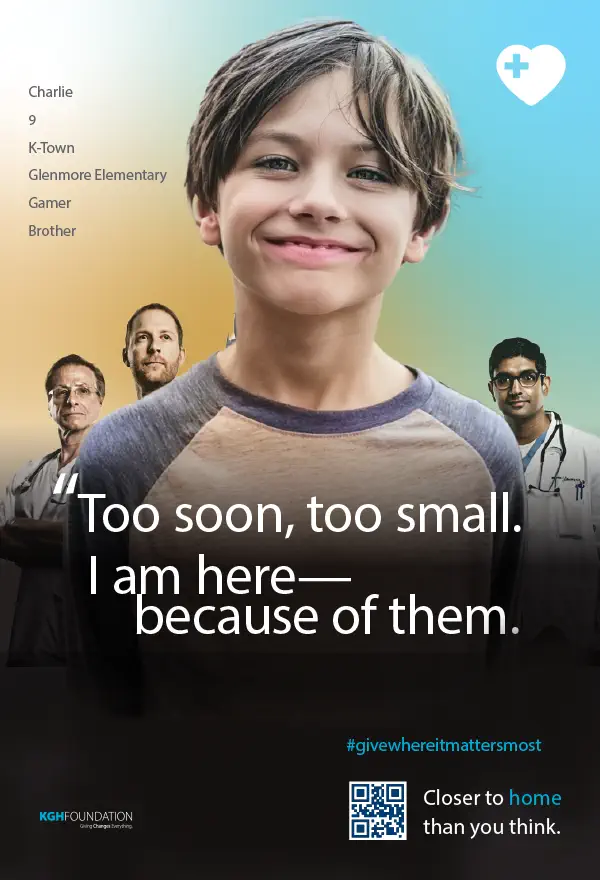
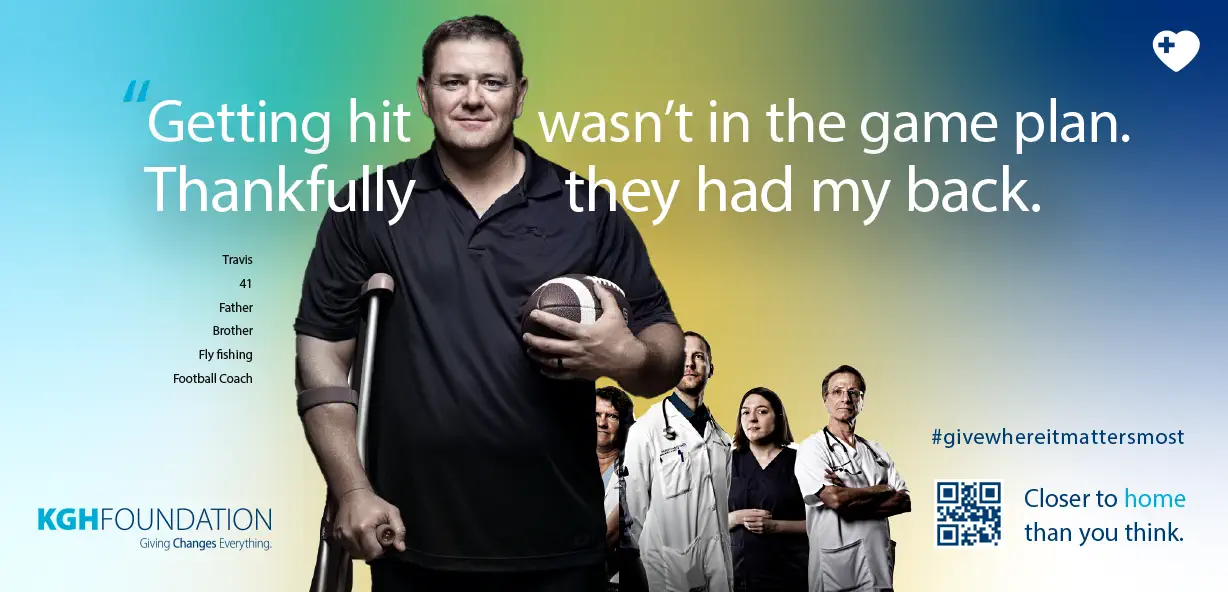
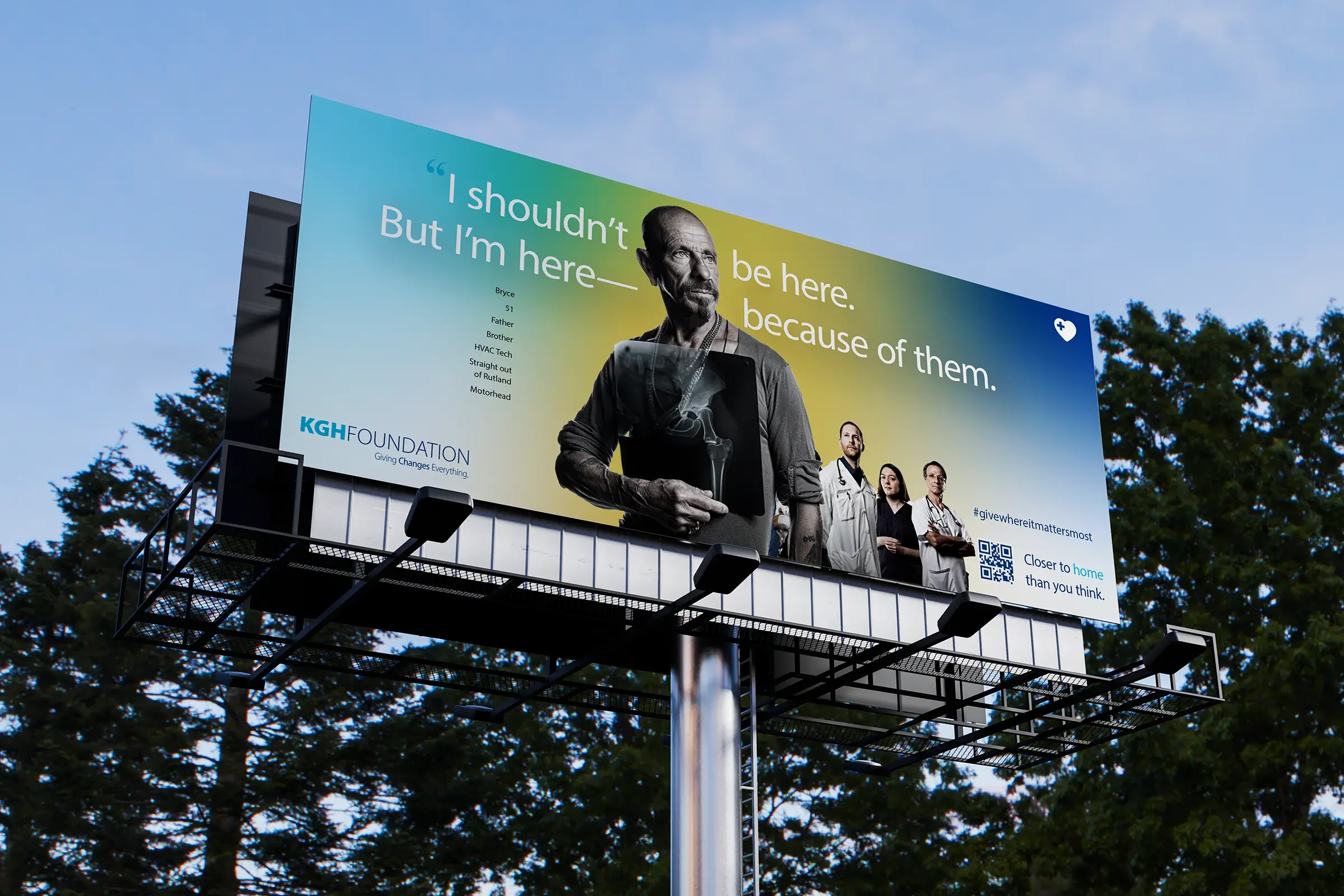
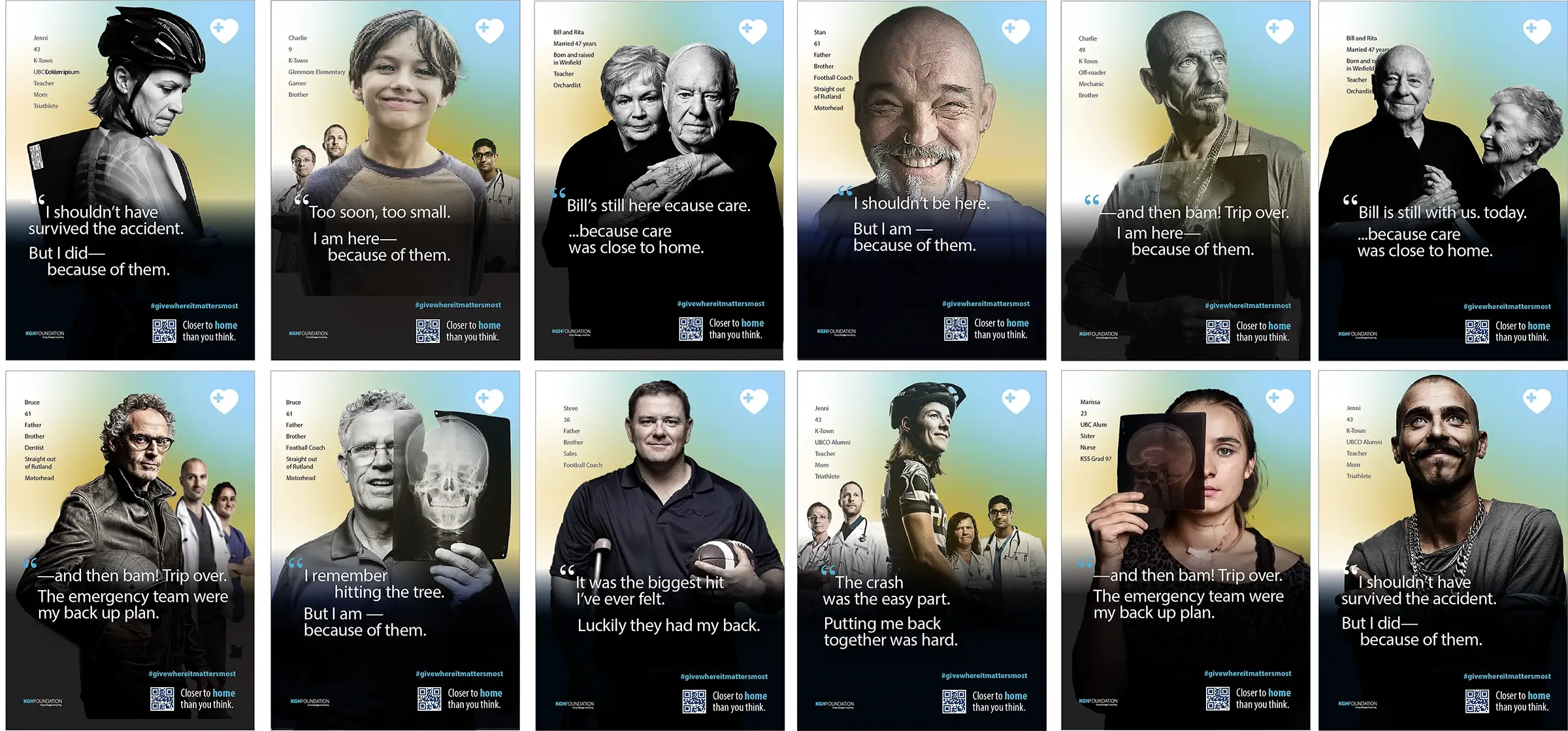
Fusebox developed “Closer to Home Than You Think” as a scalable campaign platform rather than a single-season execution. The strategy centered on first-person declarations that immediately captured attention and grounded the campaign in lived experience:
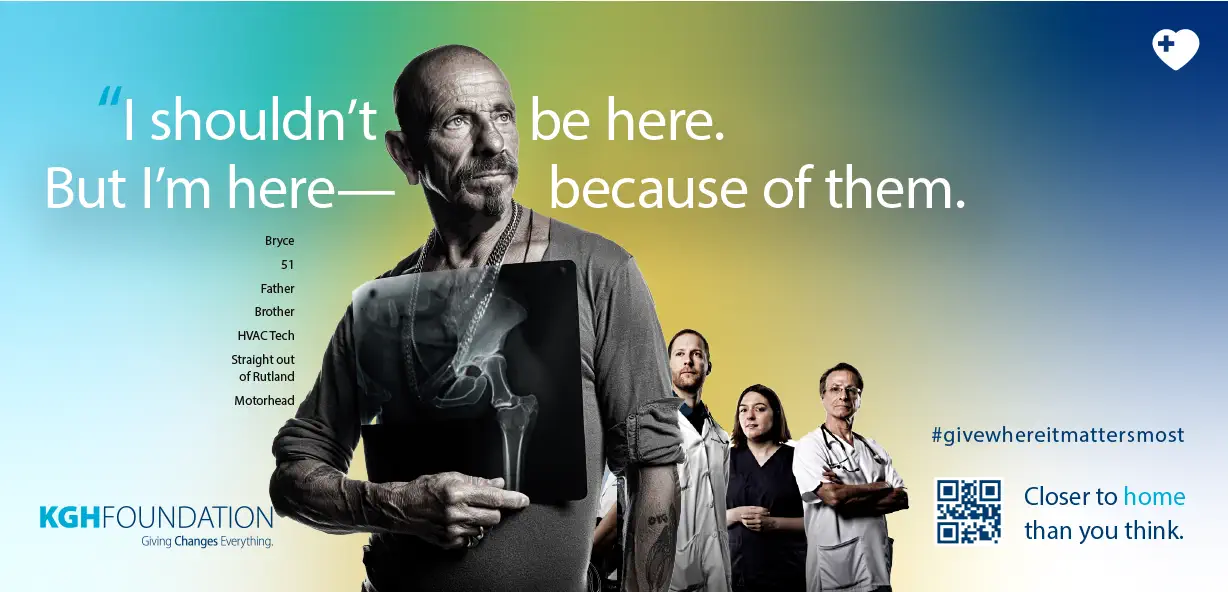
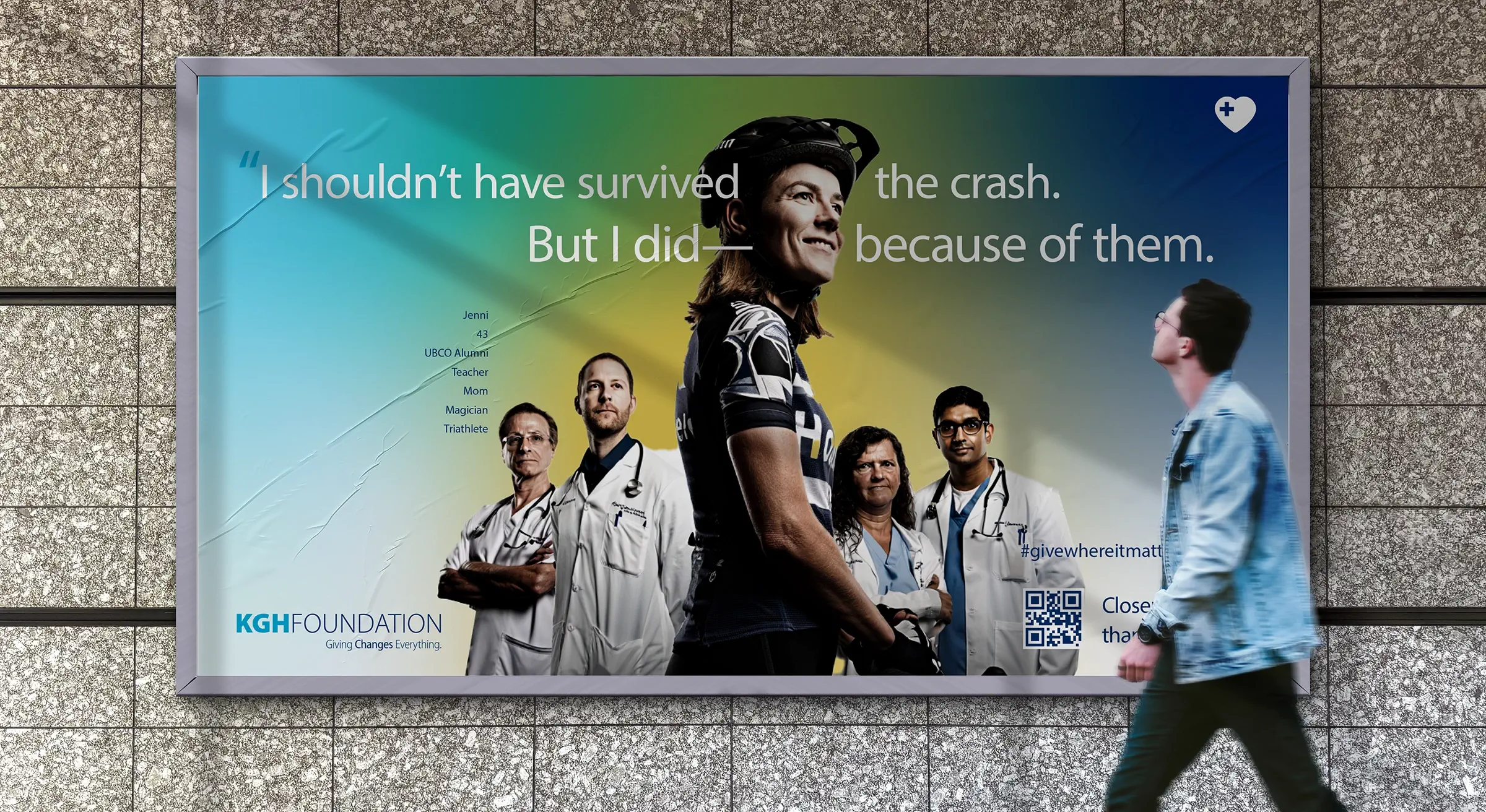
“I shouldn’t be here. But I am — because of them.”
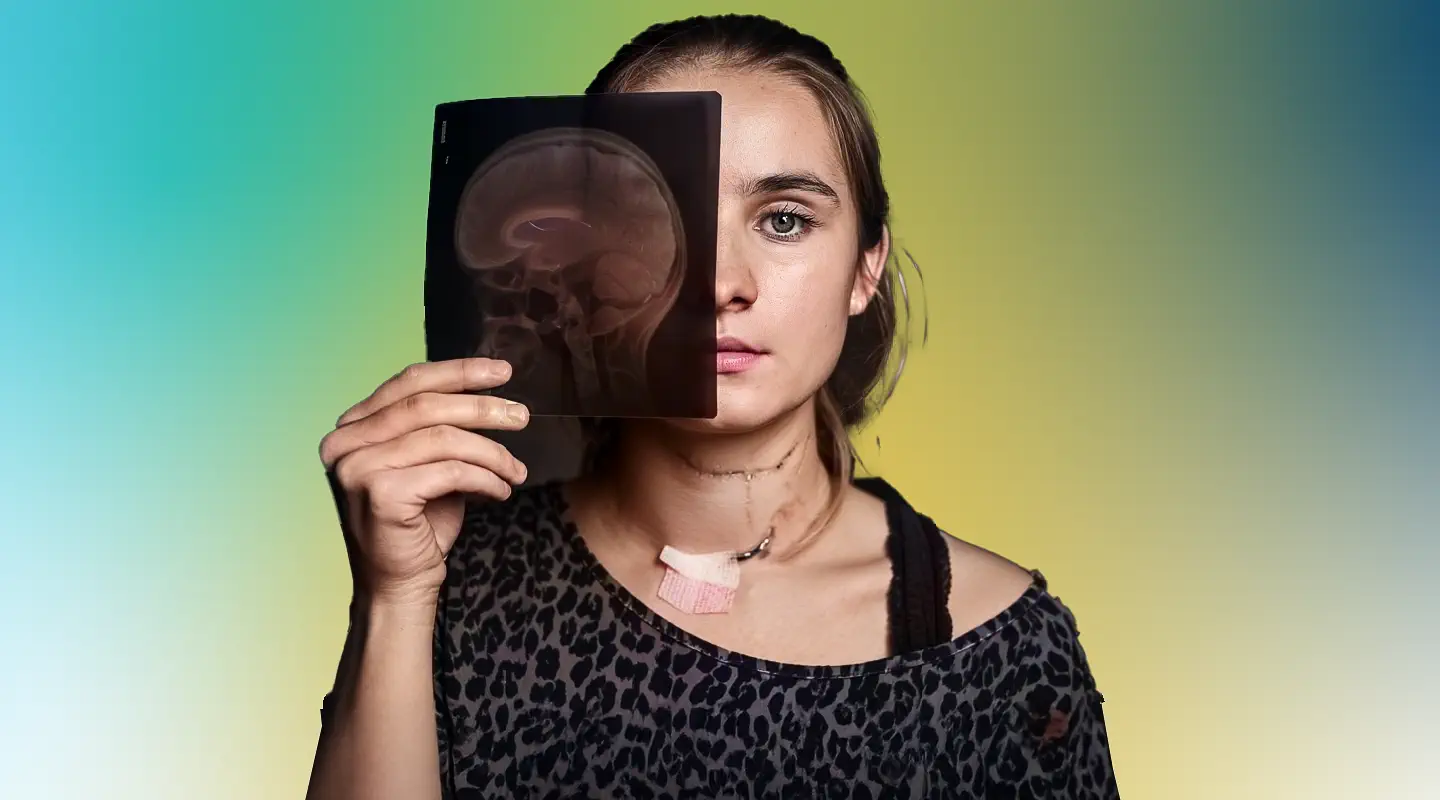
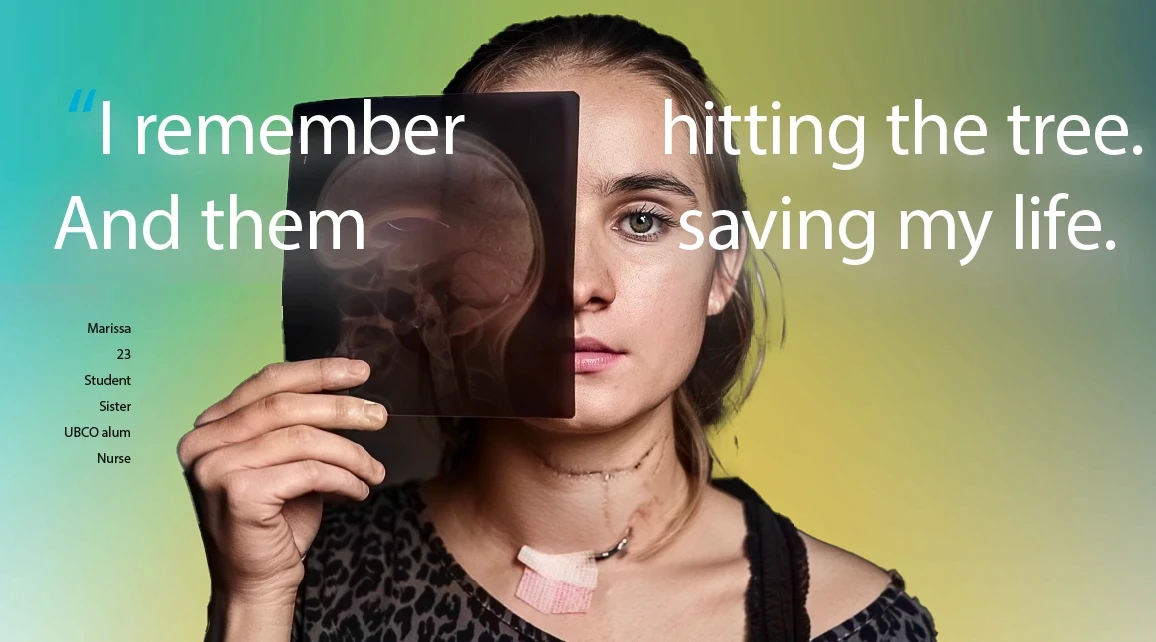
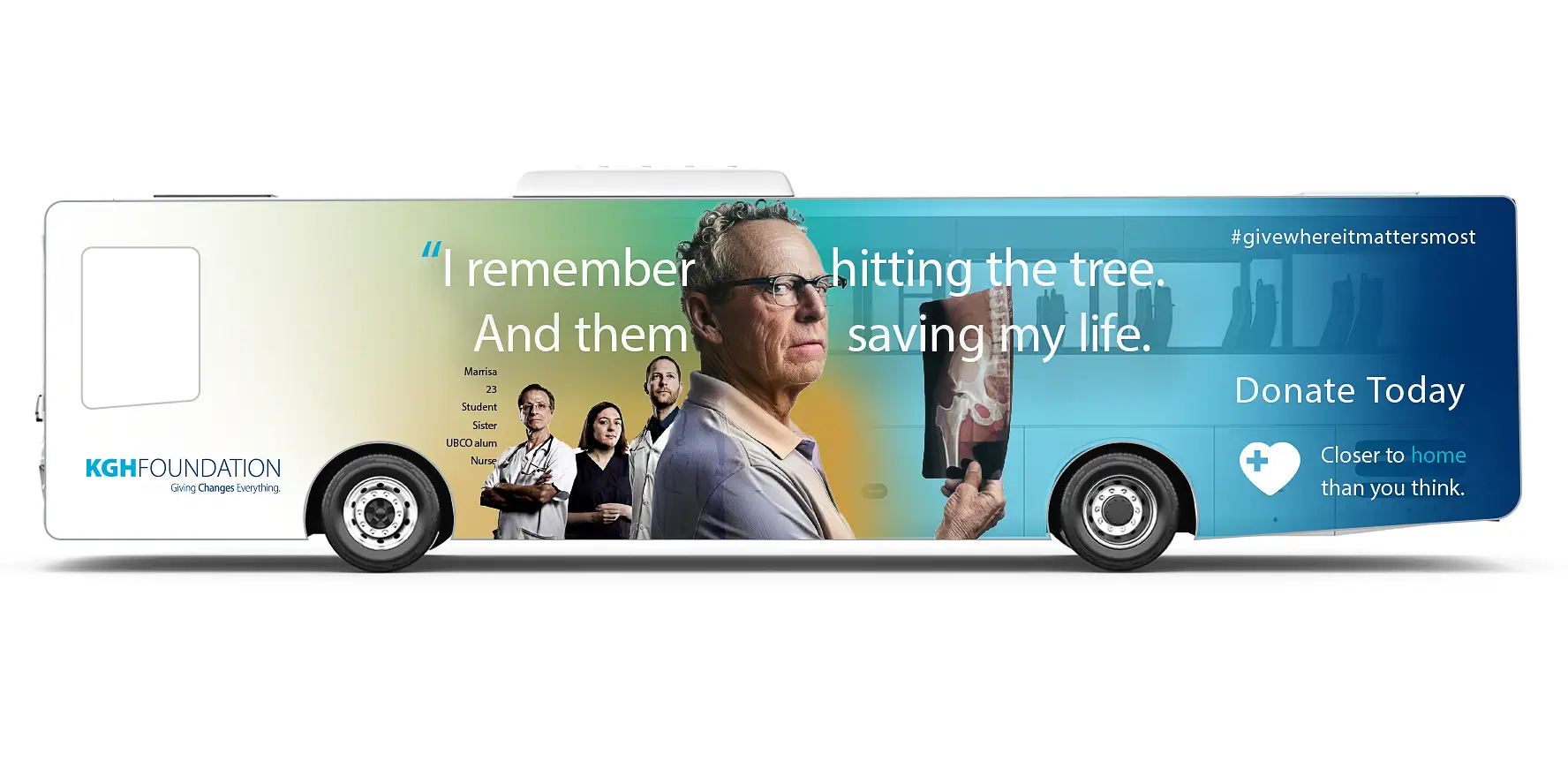
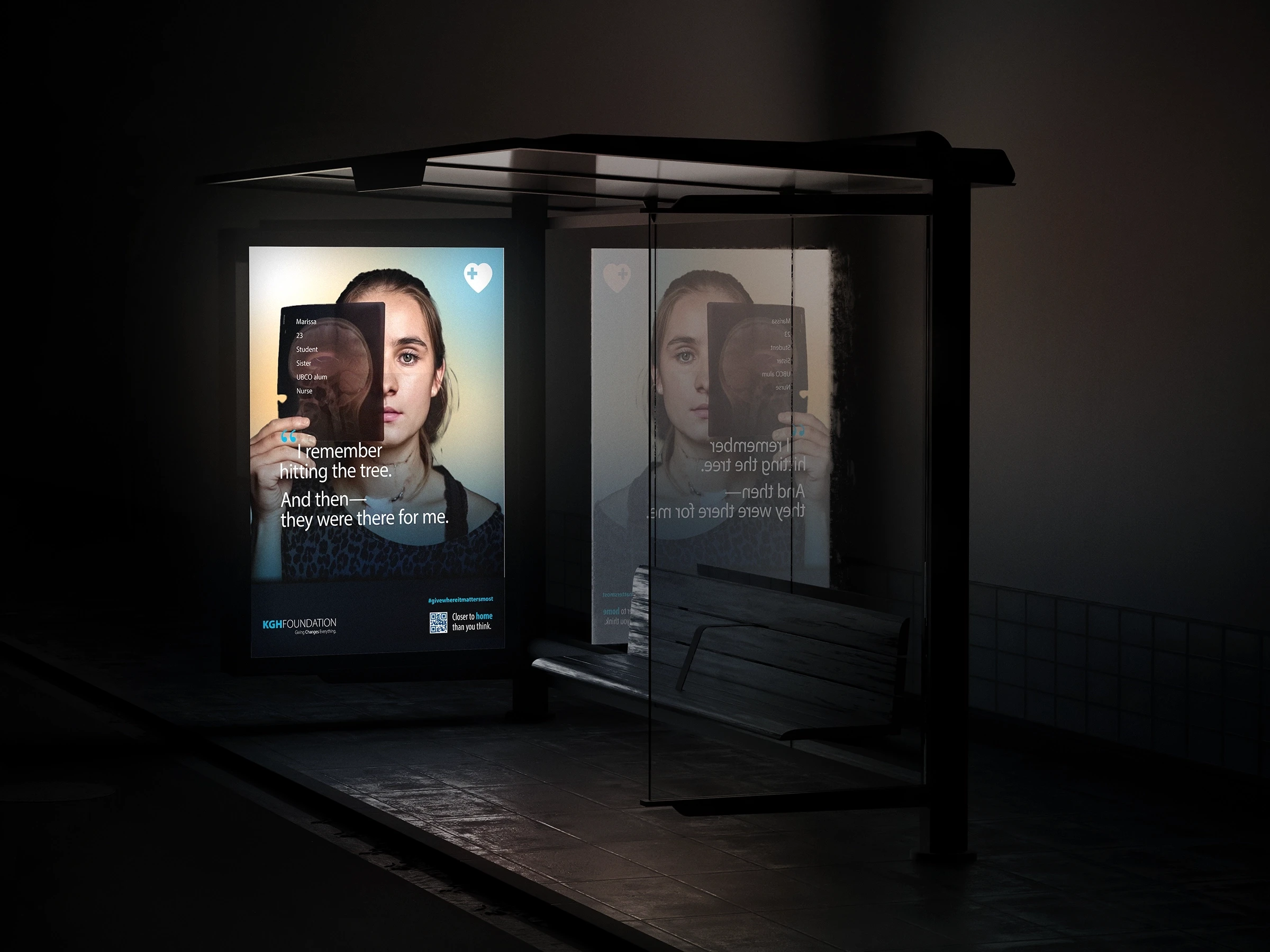
“I remember hitting the tree. And them saving my life.”
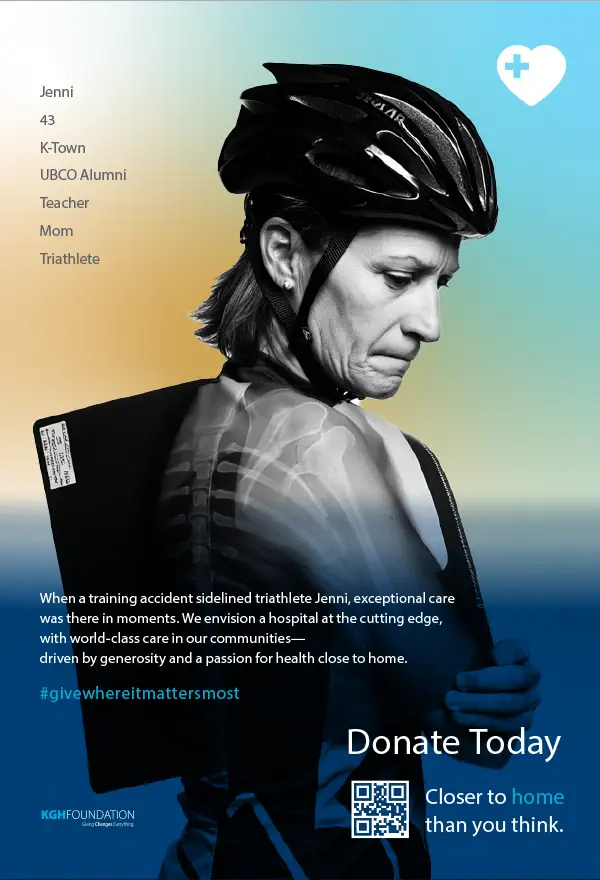
Each execution paired a real community member with the clinicians responsible for their care, visually reinforcing the connection between donor generosity, medical expertise, and survival.
A defining strategic layer was the deliberate use of hyper-local identifiers — Jenni, triathlete, teacher, UBCO alum. Bruce, dentist, straight out of Rutland, motorhead. The local football coach. Even the mayor of the city. These were intentional signals of place and belonging. They shifted the work from anonymous storytelling to community identification, allowing audiences to see neighbours, colleagues, and families reflected in the campaign.
A distinctive gradient visual system unified the executions while allowing flexibility across:
Large-format outdoor and transit placements
Digital and social media
Print collateral and donor materials
Video applications
Direct-response executions with #givewhereitmattersmost
The result was a cohesive communications system designed for Spring and Fall 2026 rollout and long-term adaptability.
The Outcome
The result is a bold, emotionally direct campaign that positions the Emergency Department as immediate, essential, and rooted in this community.
By combining powerful first-person storytelling with unmistakable local identifiers, the creative reframes emergency care as something delivered here — by clinicians and physicians whose expertise rivals major centres — not somewhere else. The work moves beyond conventional foundation messaging, grounding the campaign in recognition, proximity, and lived experience.
Enthusiastically approved by the KGH Foundation, the platform establishes an original and strategically sound campaign architecture — one designed to sustain momentum, support multi-phase rollout, and evolve for years to come.



More Work
©2026
FAQs
01
What does Fusebox actually do?
02
Are you a marketing agency or a design studio?
03
Do you work with internal marketing teams?
04
Can you handle both strategy and execution?
05
Do you develop websites in-house?
06
How does Fusebox help clients?
07
How does Fusebox handle budgets and timelines?
08
How does Fusebox support digital marketing?
09
What level of investment should we expect?
10
Do you use AI in your work?


Kelowna General Hospital Foundation
2026 Campaign: “Closer to Home Than You Think” — an integrated fundraising initiative rooted in real stories and local impact.
Creative Campaign
Creative Direction
Branding
Overview
Fusebox developed the final-stage campaign platform for the Kelowna General Hospital Foundation’s $40 million capital initiative, designed to anchor its 2026 fundraising efforts and mobilize the community around a critical funding priority.
The Challenge
The Foundation required a campaign powerful enough to close the final phase of a $40 million initiative and drive focused support for the Emergency Department. It had to be impactful and emotionally resonant, yet operate within the constraints of a hospital foundation campaign — balancing sensitivity, credibility, and donor expectations. At the same time, it needed to feel original and creatively distinctive in a category often defined by predictable fundraising messaging.
Our Approach
Fusebox developed “Closer to Home Than You Think” as a scalable campaign platform rather than a single-season execution. The strategy centered on first-person declarations that immediately captured attention and grounded the campaign in lived experience:
“I shouldn’t be here. But I am — because of them.”
“I remember hitting the tree. And them saving my life.”
Each execution paired a real community member with the clinicians responsible for their care, visually reinforcing the connection between donor generosity, medical expertise, and survival.
A defining strategic layer was the deliberate use of hyper-local identifiers — Jenni, triathlete, teacher, UBCO alum. Bruce, dentist, straight out of Rutland, motorhead. The local football coach. Even the mayor of the city. These were intentional signals of place and belonging. They shifted the work from anonymous storytelling to community identification, allowing audiences to see neighbours, colleagues, and families reflected in the campaign.
A distinctive gradient visual system unified the executions while allowing flexibility across:
Large-format outdoor and transit placements
Digital and social media
Print collateral and donor materials
Video applications
Direct-response executions with #givewhereitmattersmost
The result was a cohesive communications system designed for Spring and Fall 2026 rollout and long-term adaptability.
The Outcome
The result is a bold, emotionally direct campaign that positions the Emergency Department as immediate, essential, and rooted in this community.
By combining powerful first-person storytelling with unmistakable local identifiers, the creative reframes emergency care as something delivered here — by clinicians and physicians whose expertise rivals major centres — not somewhere else. The work moves beyond conventional foundation messaging, grounding the campaign in recognition, proximity, and lived experience.
Enthusiastically approved by the KGH Foundation, the platform establishes an original and strategically sound campaign architecture — one designed to sustain momentum, support multi-phase rollout, and evolve for years to come.


More Work
©2026
FAQs
01
What does Fusebox actually do?
02
Are you a marketing agency or a design studio?
03
Do you work with internal marketing teams?
04
Can you handle both strategy and execution?
05
Do you develop websites in-house?
06
How does Fusebox help clients?
07
How does Fusebox handle budgets and timelines?
08
How does Fusebox support digital marketing?
09
What level of investment should we expect?
10
Do you use AI in your work?


Kelowna General Hospital Foundation
2026 Campaign: “Closer to Home Than You Think” — an integrated fundraising initiative rooted in real stories and local impact.
Creative Campaign
Creative Direction
Branding
Overview
Fusebox developed the final-stage campaign platform for the Kelowna General Hospital Foundation’s $40 million capital initiative, designed to anchor its 2026 fundraising efforts and mobilize the community around a critical funding priority.
The Challenge
The Foundation required a campaign powerful enough to close the final phase of a $40 million initiative and drive focused support for the Emergency Department. It had to be impactful and emotionally resonant, yet operate within the constraints of a hospital foundation campaign — balancing sensitivity, credibility, and donor expectations. At the same time, it needed to feel original and creatively distinctive in a category often defined by predictable fundraising messaging.
Our Approach
Fusebox developed “Closer to Home Than You Think” as a scalable campaign platform rather than a single-season execution. The strategy centered on first-person declarations that immediately captured attention and grounded the campaign in lived experience:
“I shouldn’t be here. But I am — because of them.”
“I remember hitting the tree. And them saving my life.”
Each execution paired a real community member with the clinicians responsible for their care, visually reinforcing the connection between donor generosity, medical expertise, and survival.
A defining strategic layer was the deliberate use of hyper-local identifiers — Jenni, triathlete, teacher, UBCO alum. Bruce, dentist, straight out of Rutland, motorhead. The local football coach. Even the mayor of the city. These were intentional signals of place and belonging. They shifted the work from anonymous storytelling to community identification, allowing audiences to see neighbours, colleagues, and families reflected in the campaign.
A distinctive gradient visual system unified the executions while allowing flexibility across:
Large-format outdoor and transit placements
Digital and social media
Print collateral and donor materials
Video applications
Direct-response executions with #givewhereitmattersmost
The result was a cohesive communications system designed for Spring and Fall 2026 rollout and long-term adaptability.
The Outcome
The result is a bold, emotionally direct campaign that positions the Emergency Department as immediate, essential, and rooted in this community.
By combining powerful first-person storytelling with unmistakable local identifiers, the creative reframes emergency care as something delivered here — by clinicians and physicians whose expertise rivals major centres — not somewhere else. The work moves beyond conventional foundation messaging, grounding the campaign in recognition, proximity, and lived experience.
Enthusiastically approved by the KGH Foundation, the platform establishes an original and strategically sound campaign architecture — one designed to sustain momentum, support multi-phase rollout, and evolve for years to come.


More Work
©2026
FAQs
What does Fusebox actually do?
Are you a marketing agency or a design studio?
Do you work with internal marketing teams?
Can you handle both strategy and execution?
Do you develop websites in-house?
How does Fusebox help clients?
How does Fusebox handle budgets and timelines?
How does Fusebox support digital marketing?
What level of investment should we expect?
Do you use AI in your work?


Kelowna General Hospital Foundation
2026 Campaign: “Closer to Home Than You Think” — an integrated fundraising initiative rooted in real stories and local impact.
Creative Campaign
Creative Direction
Branding
Overview
Fusebox developed the final-stage campaign platform for the Kelowna General Hospital Foundation’s $40 million capital initiative, designed to anchor its 2026 fundraising efforts and mobilize the community around a critical funding priority.
The Challenge
The Foundation required a campaign powerful enough to close the final phase of a $40 million initiative and drive focused support for the Emergency Department. It had to be impactful and emotionally resonant, yet operate within the constraints of a hospital foundation campaign — balancing sensitivity, credibility, and donor expectations. At the same time, it needed to feel original and creatively distinctive in a category often defined by predictable fundraising messaging.
Our Approach
Fusebox developed “Closer to Home Than You Think” as a scalable campaign platform rather than a single-season execution. The strategy centered on first-person declarations that immediately captured attention and grounded the campaign in lived experience:
“I shouldn’t be here. But I am — because of them.”
“I remember hitting the tree. And them saving my life.”
Each execution paired a real community member with the clinicians responsible for their care, visually reinforcing the connection between donor generosity, medical expertise, and survival.
A defining strategic layer was the deliberate use of hyper-local identifiers — Jenni, triathlete, teacher, UBCO alum. Bruce, dentist, straight out of Rutland, motorhead. The local football coach. Even the mayor of the city. These were intentional signals of place and belonging. They shifted the work from anonymous storytelling to community identification, allowing audiences to see neighbours, colleagues, and families reflected in the campaign.
A distinctive gradient visual system unified the executions while allowing flexibility across:
Large-format outdoor and transit placements
Digital and social media
Print collateral and donor materials
Video applications
Direct-response executions with #givewhereitmattersmost
The result was a cohesive communications system designed for Spring and Fall 2026 rollout and long-term adaptability.
The Outcome
The result is a bold, emotionally direct campaign that positions the Emergency Department as immediate, essential, and rooted in this community.
By combining powerful first-person storytelling with unmistakable local identifiers, the creative reframes emergency care as something delivered here — by clinicians and physicians whose expertise rivals major centres — not somewhere else. The work moves beyond conventional foundation messaging, grounding the campaign in recognition, proximity, and lived experience.
Enthusiastically approved by the KGH Foundation, the platform establishes an original and strategically sound campaign architecture — one designed to sustain momentum, support multi-phase rollout, and evolve for years to come.


More Work
©2026
FAQs
What does Fusebox actually do?
Are you a marketing agency or a design studio?
Do you work with internal marketing teams?
Can you handle both strategy and execution?
Do you develop websites in-house?
How does Fusebox help clients?
How does Fusebox handle budgets and timelines?
How does Fusebox support digital marketing?
What level of investment should we expect?
Do you use AI in your work?

